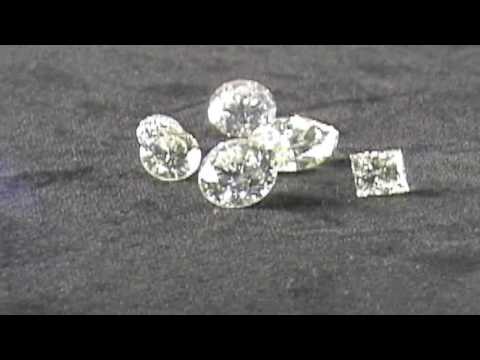
Diamonds 101
When planning to purchase a diamond, the first thing you should do is become familiar with diamonds. There are many terms to know and lots of information to read about. Here, we’ve compiled a crash course into diamonds so you can have the most important information you need in order to make an educated decision when buying a diamond.
THE FOUR C'S
If you go to any diamond information page you’ll read about the 4 C’s . Even though there’s various information that determines the value of a diamond- very in depth information- the 4 C’s are the fastest and easiest way of determining the quality and value of a diamond. The 4 C’s are: Cut, Color, Clarity, and Carat weight.
CUT
A diamond’s cut does not refer to its shape but to a diamond surface’s facets and proportions. The relationship between a diamond’s table, diameter, crown, pavilion, and girdle is very important to the cut.

It’s also important that a diamond is not cut too shallow, which means light will escape through the pavilion before being reflected making the center appear dull, or too deep, which means light will escape through the opposite side of the pavilion before being reflected making the center appear dark. A proper cut has the correct proportions so light reflects from one facet to another and then disperses through the top of the stone giving it maximum brilliance and sparkle.

SYMMETRY
Symmetry tells you how well the facets of the diamond match each other. Very good or excellent symmetry means the facets will have very little variance; however: just because a diamond has excellent symmetry still does not mean it’s cut right.
POLISH
Polish refers to the surface finish of the diamond. A diamond with only a fair or good means that light is not traveling as well as it could be through the facets.
SHAPE
Shape does not refer to a diamond’s cut, as is often confused. A diamond’s shape is its outward, more obvious, appearance or the outline of its perimeter. Some examples of diamond shapes are: round, marquise, emerald, princess, pear, asscher, cushion, oval, radiant, and heart.
COLOR
The color grading scale is used to classify a diamond based on the amount of color in it. Each letter corresponds to the amount of color in the diamond. The scale is from D (describing a diamond with no color, the best and most rare) and to Z (having yellow color). Anything after Z is considered a “fancy” colored diamond which can also be very valuable.

- D-F : colorless.
- G-J : Near colorless.
- K-M : very faint but noticeable yellow or brown tint.
- N-R : very light yellow or brown.
- S-Z : light yellow or brown.
CLARITY
Clarity refers to the number of internal flaws and blemishes, often called inclusions, in a diamond. The highest quality diamonds have no inclusions. The GIA clarity scale ranges from FL-IF (no flaws and the most expensive) to I3 (many visible inclusions).

- FL : Flawless. No internal or external flaws.
- IF : Internally flawless.
- VVS1 & VVS2 : Very, very slightly included. Inclusions are difficult to see even under 10x magnification.
- VS1 & VS2 : Very slightly included. Inclusions typically aren’t visible to the naked eye.
- SI1 & SI2 : Slightly included. Inclusions typically visible under 10x magnification. Some may have visible inclusions.
- I1 : Included. These will have a flaw visible to the naked eye.
- I2 & I3 : Included. These will have visible inclusions.
CARAT WEIGHT
A carat is equal to .2 grams and is the unit of weight for diamonds. Carat weight is also the most obvious factor when determining the value of a diamond. Diamonds can have the same carat weight but have a different diameter size. This happens if one diamond is cut too shallow while the other is cut too deep, so the shallow one will have a larger diameter and smaller depth while the deeper one will look smaller on top, but it will be bottom heavy. This example also illustrates why it is important to know everything about your diamond. You don’t want to end up buying a 2 carat diamond that’s cut too deep because not only will it be shorter on top, but you won't get the best sparkle either.